


Summary
A survey of Middle East scholars raises a difficult question: Has American academia become less willing—and less able—to pursue uncomfortable truths about the region, terrorism, and U.S. national security?
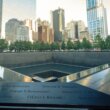
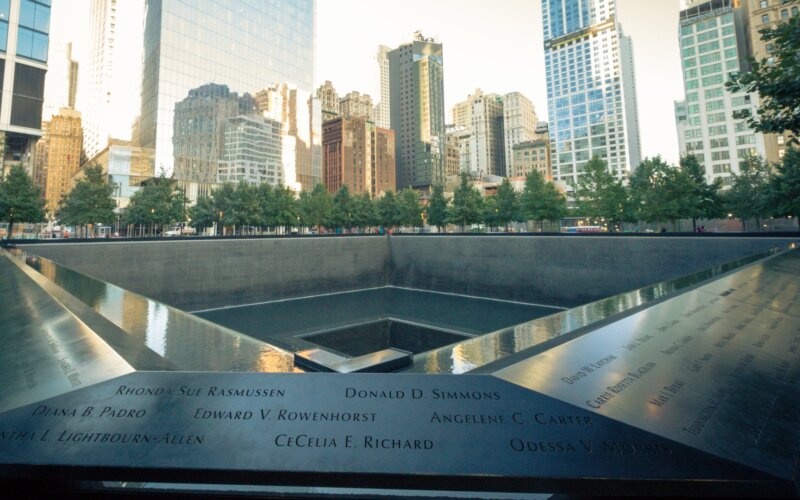
As America approaches the 25th anniversary of the September 11 attacks, the country is understandably reflecting on what changed that day—and on the lessons we were supposed to learn.
The failures before 9/11 were not simply failures of intelligence collection. They were failures of imagination, analysis, and seriousness. A terror network openly committed to killing Americans had declared war on the United States, attacked U.S. targets abroad, and continued to develop its capacity. Yet too many policymakers, institutions, and commentators failed to grasp either the nature of the threat or the ideological ecosystem that sustained it.
A quarter-century later, the danger is not that America has forgotten the date. It is that too many Americans—especially in the institutions charged with educating the next generation—may no longer understand the event itself.
A new survey from the Association for the Study of the Middle East and Africa, or ASMEA, offers a sobering assessment. Conducted from Aug. 6 through Aug. 28 among 470 scholars, the survey examines how Middle East academics assess the state of intellectual rigor, academic freedom, ideological pressure, and American understanding of 9/11.
Its findings should concern anyone who believes universities have an obligation to seek truth, teach facts, and prepare students to understand the world as it is—not as ideological fashion would prefer it to be.
A Crisis of Understanding
The most alarming finding is not merely that scholars perceive ideological bias in academia. It is that two-thirds of respondents do not believe their own students can correctly identify the core causes of the 9/11 attacks or the main perpetrators.
When scholars were asked whether they were confident their students had a firm grasp of the events leading to 9/11 and could identify both the reasons for the attack and those responsible, 42 percent strongly disagreed and another 24 percent somewhat disagreed. In total, 66 percent expressed doubt that their students understood these basic facts. Only 4 percent expressed complete confidence in their students’ knowledge.
That should be a national embarrassment.
Nearly 100 million Americans were born after 9/11 or were too young to remember it firsthand. The historical memory of that day is therefore no longer automatic. It must be taught accurately: al-Qaeda carried out the attacks; its leaders were motivated by a radical Islamist worldview; and the attacks were part of a broader ideological war against the United States and its allies—not an inexplicable reaction to vague “grievances.”
A generation that cannot explain why 9/11 happened is vulnerable to repeating the intellectual errors that preceded it.
This does not mean American foreign policy is beyond criticism. It is not. Serious scholars should scrutinize U.S. policy in the Middle East, including its strategic mistakes, unintended consequences, and moral costs. But analysis becomes ideology when criticism of American policy morphs into excuses for terrorism, denial of extremist agency, or a refusal to confront the ideas that animate groups committed to violence against the U.S.
The ability to hold two thoughts at once—to recognize policy failures while refusing to sanitize terrorism—is the baseline of intellectual maturity. The survey suggests that baseline is eroding.
When Scholarship Provides Cover
ASMEA’s survey found that 65 percent of respondents agreed with the statement that scholarly or public commentary from academia since 9/11 has sometimes provided intellectual cover or legitimacy for ideologies, regimes, or groups hostile to the U.S. Forty-two percent strongly agreed; 23 percent somewhat agreed. Only 13 percent strongly rejected the proposition.
This is a striking indictment coming from within Middle East studies itself.
The problem is not that scholars study America’s adversaries, criticize Washington, or challenge conventional wisdom. Those are essential functions of serious scholarship. The problem arises when the academy treats anti-Americanism as sophistication, treats Western self-criticism as the only legitimate form of moral analysis, and treats the ideological commitments of authoritarian regimes or terrorist movements as somehow less worthy of scrutiny than the U.S.
Too often, that imbalance produces a distorted picture of the Middle East.
Iran’s regime is not simply a regional actor responding to American pressure; it is a revolutionary theocracy with an explicit ideological commitment to exporting its revolution, eliminating Israel, and challenging American power. Hamas is not simply a Palestinian political organization; it is an Islamist terrorist movement whose founding worldview and record of violence matter. Hezbollah is not merely a Lebanese political player; it is an Iran regime-backed terrorist organization with a long history of targeting Americans and U.S. interests.
Words matter because clarity matters. When universities train students to see every conflict exclusively through the lens of Western culpability, they create graduates unable to recognize the agency, ideology, and ambitions of America’s adversaries.
That intellectual failure has practical consequences. Foreign policy depends on accurately assessing threats. If scholars and students cannot distinguish between explanation and justification, or between a grievance and a genocidal ideology, then public debate becomes less honest and national-security decision-making becomes less sound.
Truth-Seeking Is Losing Ground
The survey’s broadest finding may be its most consequential: 71 percent of respondents said American academia is worse equipped today than it was 25 years ago to make truth-seeking its central mission.
Forty-one percent said academia is “much worse equipped,” while another 30 percent said it is “somewhat worse equipped.”
That assessment crosses professional categories. According to ASMEA, the response did not significantly vary by academic rank, discipline, institution type, or length of career. In other words, this is not simply the complaint of one ideological faction or one generation of professors. It is a broad concern that the academy’s culture has shifted away from open inquiry and toward predetermined conclusions.
Universities cannot fulfill their mission if inquiry is conditioned on political conformity.
Academic freedom does not mean that every claim is equally valid, nor does it insulate poor scholarship from criticism. It means scholars must be free to ask inconvenient questions, test prevailing assumptions, challenge fashionable narratives, and follow evidence even when the conclusions make colleagues uncomfortable.
A university that rewards conformity may produce activism. It may produce jargon. It may produce highly credentialed people fluent in the language of moral certainty. But it will not reliably produce knowledge.
That distinction is especially important in Middle East studies, where the cost of getting things wrong is not abstract. It affects how Americans understand terrorism, Iran, Israel, regional wars, religious extremism, authoritarianism, energy security, and the strategic interests of the United States.
Younger Scholars Feel the Pressure
The survey also suggests that the problem may be growing more entrenched.
Respondents with fewer than 10 years in academia were significantly more likely than those with 40 years or more to report recent self-censorship, to perceive departmental orthodoxy, and to doubt that professional decisions are made on merit. Younger scholars reported higher levels of self-censorship—3.25 compared with 2.66 among the most senior respondents—and greater perceptions of departmental orthodoxy, at 3.51 compared with 2.87. They were also less likely to believe decisions rest on merit, 2.88 compared with 3.37.
The numbers cannot establish every cause. Nor should a survey of 470 Middle East scholars be treated as a referendum on every department at every American university. ASMEA’s survey is limited to scholars in this field, and its findings should be understood within that scope.
But the directional message is difficult to dismiss: younger scholars are more likely to describe environments in which ideological pressures shape what can be said, researched, or publicly argued.
That is precisely how intellectual decline becomes institutionalized. Senior faculty may remember a time when disagreement was normal and professional risk was manageable. Junior scholars, meanwhile, learn what subjects to avoid, which conclusions are acceptable, and when silence is safer than independent thought. Eventually, self-censorship no longer feels like censorship. It feels like professionalism.
The Lesson We Cannot Ignore
America did not lack information before 9/11. It lacked the willingness to synthesize information honestly, prioritize the threat, and confront realities that were politically inconvenient.
Twenty-five years later, the country should be wary of reproducing that failure in a different form.
The lesson of 9/11 is not that Americans should abandon debate, endorse simplistic narratives, or stop examining their own government critically. It is that national security requires intellectual seriousness. It requires the ability to name enemies accurately, understand their ideologies, examine evidence without fear, and separate moral analysis from partisan or academic fashion.
If two-thirds of Middle East scholars doubt that students can identify the causes and perpetrators of 9/11, the problem is bigger than a gap in historical knowledge. It signals a deeper failure to teach the relationship between ideology, terrorism, and geopolitical power.
America’s universities should be among the country’s most important early-warning systems. They should help students and policymakers see threats clearly before those threats become catastrophes. Instead, too many academics believe the institutions meant to advance truth are now less capable of doing so than they were on September 11, 2001.
That is not a reason to give up on higher education. It is a reason to demand better from it.
Twenty-five years after 9/11, the most urgent educational task may be restoring a culture in which facts are not negotiable, ideological conformity is not confused with scholarship, and truth-seeking is once again treated as the university’s central obligation.
The survey was conducted by ASMEA from Aug. 6–28, 2026, among 470 respondents in Middle East studies. Its findings are a perspective from that field rather than a representative survey of all American faculty, but its warnings about student knowledge, ideological pressure, and the decline of open inquiry deserve serious attention.